|
|
|
|
|
|
Table of Contents
Protein Calculator
Protein is one of the most vital nutrients for the human body—playing a central role in muscle development, tissue repair, enzyme function, metabolism, and even immune defense. Whether you’re a fitness enthusiast, athlete, or simply looking to improve your overall health, understanding how much protein your body needs is key. That’s where a Protein Calculator comes in. This smart tool helps you eliminate the guesswork and gives you tailored recommendations based on your weight, lifestyle, and goals.
This comprehensive guide explains how a protein calculator works, why protein is important, how much you should consume, and how to optimize your intake for better health, performance, and longevity.
Why Protein Is Essential for Health and Fitness
Protein is made up of amino acids, the fundamental building blocks for nearly every function in the body. Without adequate protein, your body cannot properly recover, grow, or defend itself. Here are some of the primary roles protein plays:
- Muscle Growth and Repair: Crucial for athletes, weightlifters, and anyone engaged in physical activity.
- Hormone Production: Proteins help regulate hormones like insulin and growth hormone.
- Enzyme Function: Essential for digestion and metabolic reactions.
- Immune Support: Antibodies that protect your body from infections are made of proteins.
What Happens If You Don’t Get Enough Protein?
A lack of protein can lead to several health concerns, including:
- Muscle Loss – Particularly in older adults or those in a calorie deficit.
- Weak Immune System – Increased susceptibility to illness.
- Delayed Recovery – Longer healing time after injuries or workouts.
- Fatigue & Poor Performance – Physical and mental energy levels may decline.
What Is a Protein Calculator and How Does It Work?
A Protein Calculator is an online tool designed to estimate your daily protein requirements. It uses a combination of factors to provide a personalized recommendation. These include:
1. Body Weight
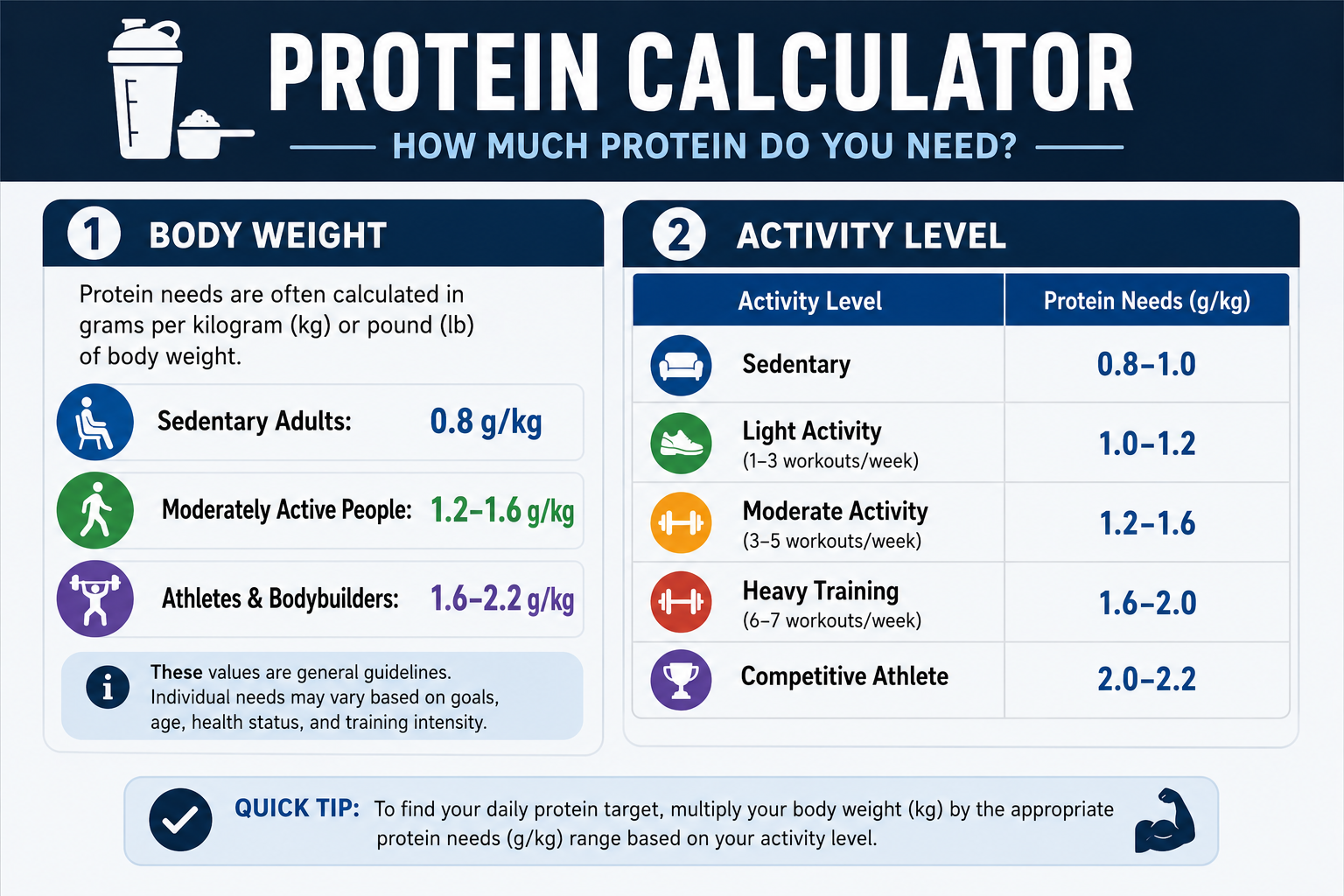
Protein needs are often calculated in grams per kilogram (kg) or pound (lb) of body weight.
- Sedentary Adults: 0.8g/kg
- Moderately Active People: 1.2–1.6g/kg
- Athletes & Bodybuilders: 1.6–2.2g/kg
2. Activity Level
| Activity Level | Protein Needs (g/kg) |
|---|---|
| Sedentary | 0.8–1.0 |
| Light Activity (1–3 workouts/week) | 1.0–1.2 |
| Moderate Activity (3–5 workouts/week) | 1.2–1.6 |
| Heavy Training (6–7 workouts/week) | 1.6–2.0 |
| Competitive Athlete | 2.0–2.2 |
3. Fitness Goals
- Muscle Gain: 1.6–2.2g/kg
- Fat Loss: 1.6–2.2g/kg (to maintain lean mass)
- Maintenance: 1.0–1.6g/kg
4. Age and Gender
Men generally need more protein due to higher lean mass.
Older adults (50+) benefit from slightly higher intake (1.0–1.2g/kg) to combat muscle loss with age.
How to Use a Protein Calculator Effectively
Most protein calculators will ask you for the following information:
- Weight and Height – To estimate lean mass.
- Age and Gender – To account for metabolic differences.
- Activity Level – Frequency and intensity of your workouts.
- Goals – Whether you’re looking to gain muscle, lose fat, or maintain your current physique.
Example Calculation:
- Weight: 75 kg (165 lbs)
- Activity Level: Moderate (4 workouts/week)
- Goal: Muscle Gain
- Formula: 75 kg × 1.8 g/kg = 135g protein/day
You would aim to consume roughly:
- 30–40g per meal, 4 meals a day
- 20–30g post-workout for muscle recovery
Common Myths About Protein – Debunked
Let’s clear up some common misconceptions around protein intake:
Myth 1: High Protein Harms Your Kidneys
Fact: Unless you have pre-existing kidney disease, a high-protein diet is safe for healthy individuals.
Myth 2: You Can’t Absorb More Than 30g of Protein per Meal
Fact: Your body can absorb all the protein you consume—it just digests and utilizes it over time.
Myth 3: Plant Protein Is Inferior
Fact: While some plant proteins are incomplete, combining sources (e.g., lentils + rice) ensures a full amino acid profile.
Top Sources of Protein
Here are some of the best food sources to meet your protein goals:
| Food Item | Protein (per 100g) | Calories |
|---|---|---|
| Chicken Breast | 31g | 165 kcal |
| Salmon | 25g | 208 kcal |
| Eggs (2 large) | 12g | 140 kcal |
| Greek Yogurt | 10g | 100 kcal |
| Cooked Lentils | 9g | 116 kcal |
| Tofu | 8g | 76 kcal |
Whey vs. Plant-Based Protein: Which Is Better?
Whey Protein
- Fast-absorbing
- Ideal for post-workout recovery
- High in leucine (an essential amino acid for muscle building)
Casein Protein
- Slow-digesting
- Perfect before bedtime for sustained protein release
Plant-Based Proteins (Pea, Rice, Hemp)
- Great for vegans and vegetarians
- Combine for complete amino acid coverage
Tips to Hit Your Daily Protein Goals
Here’s how to ensure you meet your protein target every day:
1. Include Protein in Every Meal
- Breakfast: Greek yogurt, eggs, or protein oats
- Lunch: Chicken, turkey, tofu, or beans
- Dinner: Salmon, lean beef, or legumes
- Snacks: Cottage cheese, protein bars, shakes
2. Use a Nutrition Tracker
Apps like MyFitnessPal help monitor protein intake and make meal planning easier.
3. Prepare Meals in Advance
- Cook and freeze high-protein meals
- Hard-boil eggs for snacks
- Make protein smoothies ahead of time
4. Supplement If Needed
- Whey Protein after workouts
- Casein Protein before bed
- BCAAs during fasted training or long sessions
Who Should Use a Protein Calculator?
A Protein Calculator is helpful for anyone aiming to improve their nutrition, especially:
- Athletes and Bodybuilders – To support muscle recovery and growth
- Weight Loss Seekers – To preserve lean mass during fat loss
- Older Adults – To reduce muscle degeneration with age
- Vegans & Vegetarians – To ensure they’re getting enough complete protein
Conclusion: Start Using a Protein Calculator Today
Protein is not just important for muscle building—it’s essential for nearly every biological function. Whether your goal is to lose weight, build muscle, improve performance, or simply stay healthy, knowing your daily protein needs is crucial. A Protein Calculator makes it easy to determine how much protein your body needs, based on your unique metrics and goals.
Key Takeaways:
- Your protein requirement varies depending on weight, activity level, and goals.
- Most active individuals need 1.2–2.2g/kg of body weight.
- Spread protein across 4–5 meals per day for best absorption.
- Track your intake using nutrition apps or food journals.
- Combine animal and plant-based proteins for well-rounded nutrition.
Use this Protein Calculator now and take the first step toward personalized, protein-powered nutrition.
FAQ’s
How accurate is a protein calculator?
A protein calculator provides a close estimate based on your weight, activity level, and fitness goals. While not as exact as medical-grade tools like DEXA scans or consultations with a registered dietitian, it offers a reliable baseline for setting daily protein targets. Use it as a practical guide to improve your diet and performance.
Should I change my protein intake on rest days?
Yes, but only slightly. Even when you’re not exercising, your body continues to repair and build muscle. A protein calculator typically recommends maintaining 1.2–1.6g/kg of body weight on rest days. If you’re completely inactive, a small reduction is fine. However, active individuals should keep protein levels steady for proper recovery.
Can I use a protein calculator for weight loss?
Definitely! A protein calculator helps determine how much protein you need to retain muscle while losing fat. A higher protein intake—around 1.6 to 2.2g/kg—is ideal during a calorie deficit. Combined with strength training, this supports fat loss while preserving lean mass, improving your overall body composition.
Do vegetarians need more protein than those who eat meat?
In some cases, yes. Plant-based proteins are often less bioavailable, meaning your body may not absorb them as efficiently. Vegetarians can still thrive by consuming 10–20% more protein than the amount suggested by the protein calculator. Combine different plant sources (like beans with rice or lentils with quinoa) to ensure complete amino acid intake.
Is consuming too much protein dangerous?
For healthy individuals, high-protein diets—up to 3.5g/kg—are generally safe. The belief that protein harms kidneys is largely a myth, unless you already have a kidney-related medical condition. If you’re active or pursuing muscle gain, following your protein calculator’s higher-end recommendations is not only safe but beneficial.
How often should I update my protein requirements?
It’s wise to recalculate your needs every 3–6 months or whenever you experience a change in body weight (±5 kg), activity level, or fitness goal. Whether you shift from cutting to bulking or start a new workout regimen, updating your protein calculator input ensures your nutrition stays aligned with your progress.
More to Explore and Resources
- Explore more on our site:
➤ Body Fat Percentage Calculator
➤ Ideal Body Weight Calculator
➤ Body Mass Index (BMI) Calculator
➤ Calorie Calculator - Trusted External Resources:
➤ WHO Recommendations
➤ Department of Health and Human Services
➤ National Institutes of Health (NIH)